Clean Firm Power in Europe’s Energy Transition: Evidence, Constraints, and System Roles
Assessing the role of clean firm power in Europe’s transition to a reliable, cost-effective net-zero electricity system.
the problem
Europe’s transition to a decarbonised electricity system raises a fundamental question: how can power systems maintain reliability during extended periods of low renewable generation?
A wide range of modelling studies explore different pathways to net zero, but they vary significantly in the technologies included and the assumptions applied. This makes it difficult to understand whether clean firm power is a technology-specific solution or whether different technologies can provide broadly the same system function.
The objective of this study was to investigate how modelling studies assess clean firm power and compare the roles and system impacts attributed to it across European decarbonisation pathways. Particular attention was given to the effects of realistic system constraints, including sector coupling, land availability, import risks and multi-decadal weather variability.
the APPROACH
We reviewed and compared modelling studies of European decarbonised electricity systems to assess how different forms of clean firm power contribute to system performance.
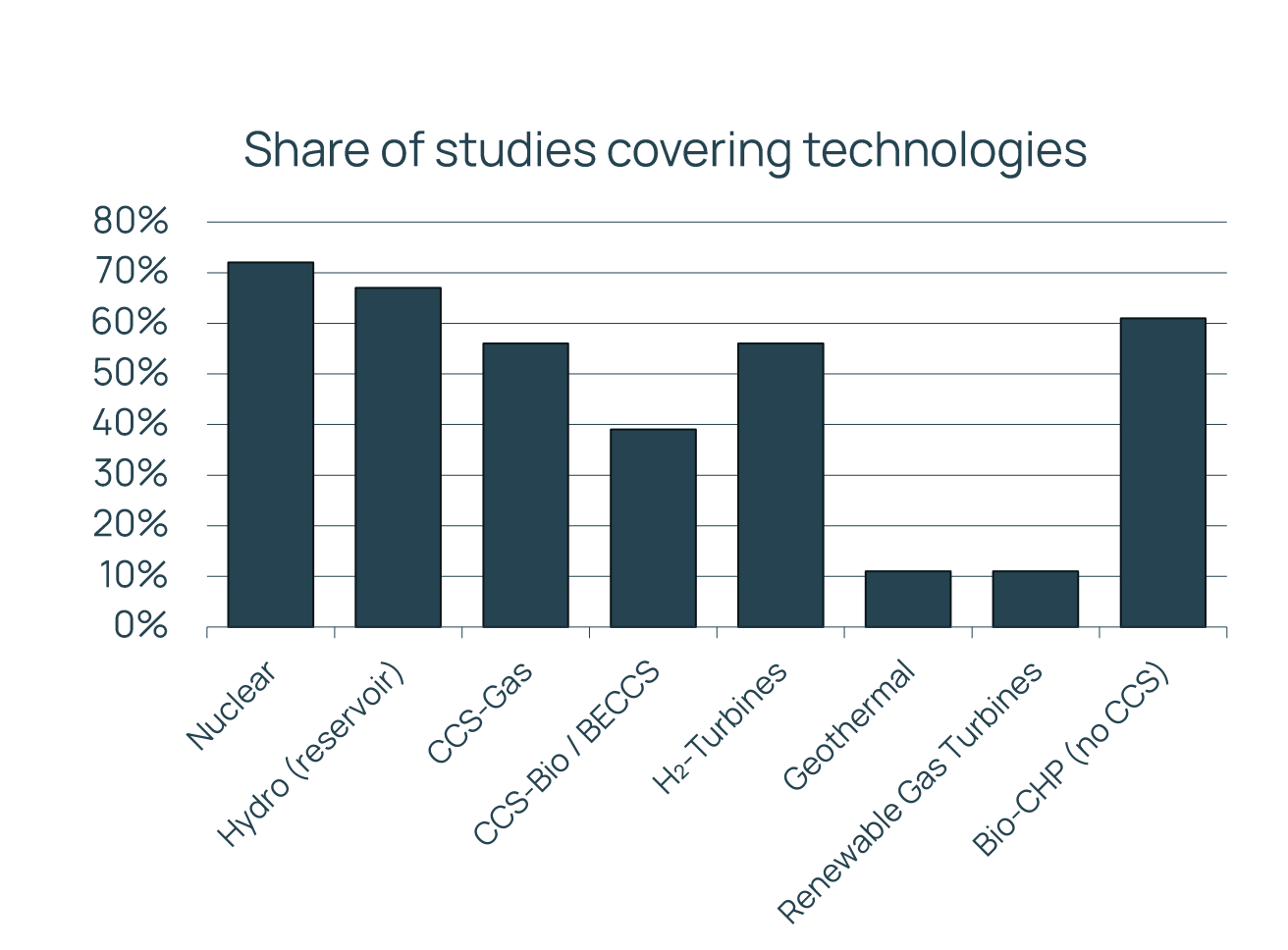
The analysis examined the role of technologies including nuclear, geothermal, CCS-equipped gas, biomass, reservoir hydropower and hydrogen-fired turbines, as well as long-duration storage alternatives. Rather than focusing solely on the technology itself, the review assessed the system function provided by these resources: reliable, dispatchable, low-carbon generation capable of supporting the system during periods of low renewable output.
The analysis also mapped the modelling approaches used across the literature and examined how assumptions around sector coupling, land availability, import dependency and weather variability influence the resulting role of clean firm power.


the oUTCOME
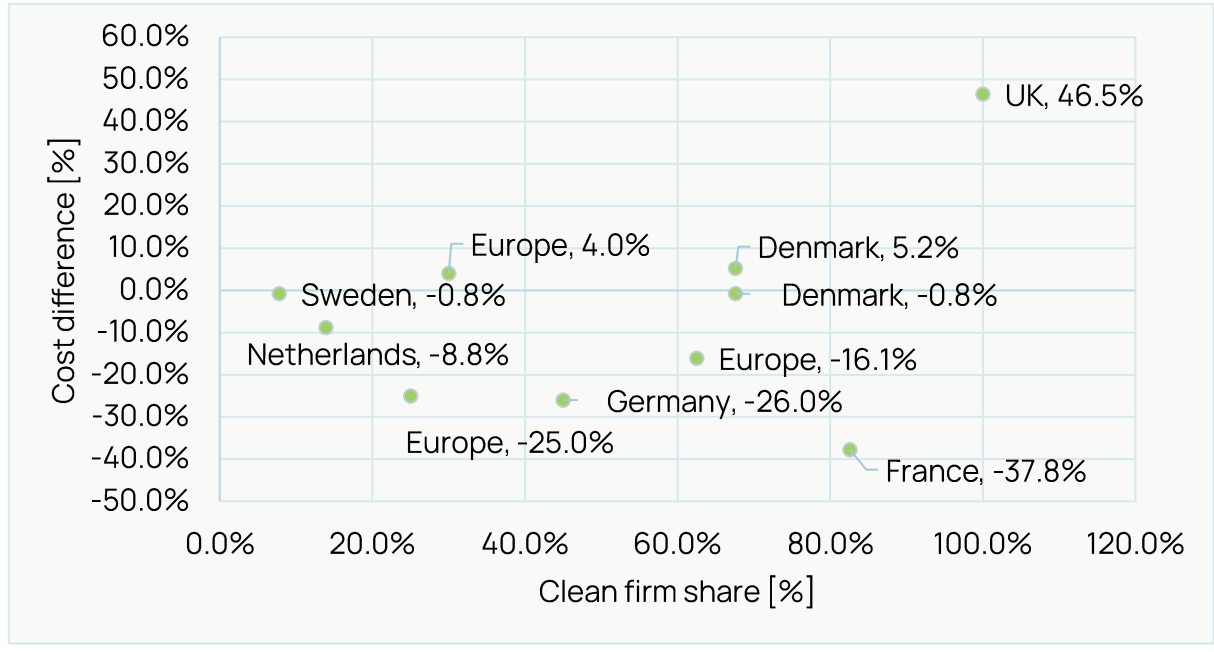
The review shows that the specific clean firm technology matters less than the system function it provides. Across different models and regions, credible net-zero pathways consistently require some form of dispatchable, low-carbon capacity capable of sustaining output during extended periods of low renewable generation.
The technologies providing this function vary according to regional resources and political preferences, ranging from nuclear and geothermal to CCS-equipped gas, biomass, reservoir hydropower and hydrogen-fired turbines. However, their underlying contribution to system reliability is broadly interchangeable.
Studies incorporating realistic constraints tend to show a stronger and more persistent role for clean firm power. These resources can help maintain system adequacy, moderate overall system costs and reduce the need for extensive infrastructure overbuild.
The review also identifies important gaps in existing modelling. Further research should incorporate price volatility, self-sufficiency metrics and higher spatial resolution to better understand the role of clean firm power in future European energy systems.
deliverables
Schedule a Consultation with our team of experts