Opens in a new tab
System Studies

Research & policy

Research that informs energy policy, built on academic rigour and practical experience of how energy systems and industry actually work.


image-default-careers

what is Research & policy?

Energy policy is often decided on evidence that misses how the system behaves as a whole, or what investors and operators can realistically deliver. We research and write the reports that fill that gap: literature and model reviews, evaluation frameworks and techno-economic assessments that public bodies use to set methods and priorities. We also coordinate the research itself, proposing common methods and indicators so studies can be compared and policymakers are not left reconciling results that cannot be put side by side.

That work is for intergovernmental organisations, NGOs, research consortia and industry bodies that need independent, citable analysis when the available studies disagree, leave out key costs and risks, or overlook the options that matter. We establish what the evidence supports, where it falls short, and what a sound basis for the decision looks like. It runs hand in hand with Regulatory Advisory: our research strengthens the evidence clients bring into the policy process, and our tracking of that process keeps the research relevant.

Benefits of Research & policy

Academic rigour and citable results

Our team holds doctorates in energy systems, physics and engineering, and our reports are co-authored with universities and reviewed by international experts from industry, research and system operation. The result is analysis that holds up when it is cited, challenged and built on.

Two-sided expertise

We combine system-wide studies with years of advising industrial clients on their own investments, so our recommendations reflect what works on the ground as well as on paper.

Research that becomes policy

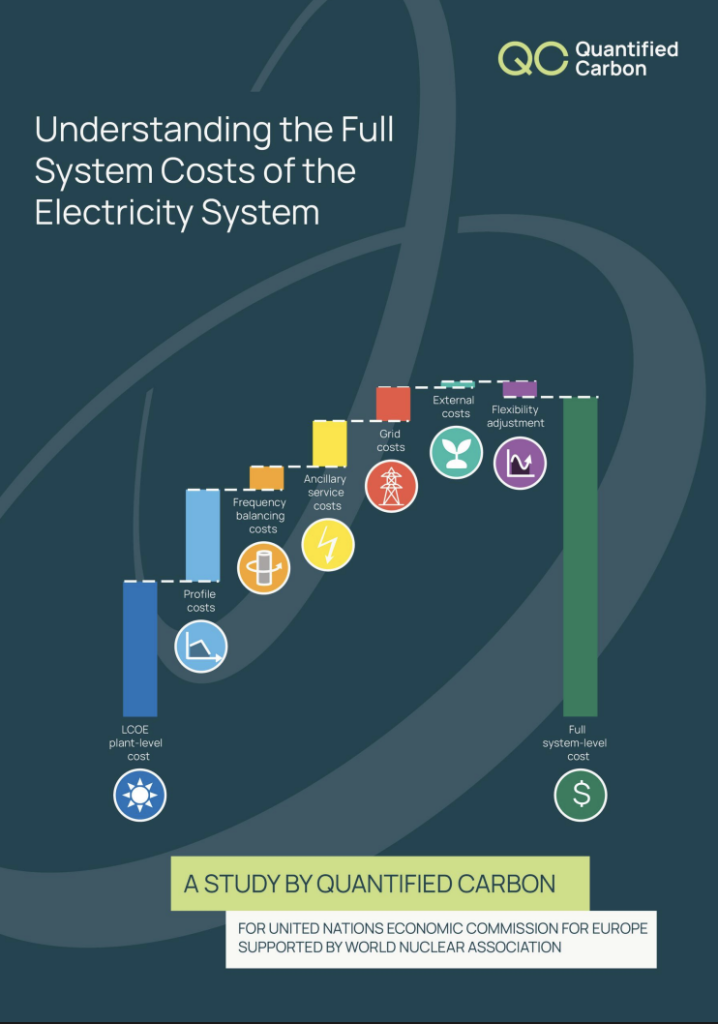
Our report on full system costs for UNECE is a core building block of the Protocol for a Full System Value and Cost Approach, a planning method for UNECE member states.

Evidence and policy process, together

Our research gives the consultation responses and stakeholder dialogue in our Regulatory Advisory service a stronger evidence base. In turn, following the policy process closely keeps our research focused on the questions decision-makers are asking.

Our experience in the field

UNECE with support from the World Nuclear Association

The problem
Power system planning still leans on plant-level cost metrics such as LCOE, which leave out integration, grid, ancillary service and resilience costs. UNECE needed a clearer basis for comparing system pathways.
our approach
We reviewed cost metrics and cost-optimisation modelling practice, then introduced the System Cost Breakdown of Electricity (SCBOE), which builds costs up from plant level to full system cost. We also proposed indicators across competitiveness, energy security, environment, transmission, flexibility and operational safety. The report was co-written with NTNU and Wrocław University of Science and Technology.
the outcome
UNECE built its Protocol for a Full System Value and Cost Approach (ECE Energy Series No. 83) directly on the report, with the SCBOE as a core building block.
see full case study

Repower Initiative

The problem
Repowering coal plants keeps grid connections, sites, heat supply and jobs, but energy system models rarely capture that value, so policy studies tend to undervalue it.
our approach
We assessed 40 models (integrated assessment, capacity expansion, dispatch and site-level) on how well they can represent repowering and how widely they are used. We identified seven structural failure modes and extended the trilemma evaluation framework with infrastructure value and just transition indicators.
the outcome
A guide for analysts and policymakers, with a two-stage study design: a system-level question (does repowering contribute?) followed by a siting and implementation question (where and how?).
see full case study

Svenskt Näringsliv

The problem
How has the CfD programme in the UK performed and what could a similar programme for nuclear or offshore wind look like in Sweden?
our approach
We performed historical analysis of the UK power market over the last decade to see the outcome of the CfD scheme, and the modelled the Swedish power market in 2040, with and without CfDs.
the outcome
Shedding light on the impact of CfDs in a Swedish context. Analysing cost compared to power price reductions, to build understanding of the implications of subsidised nuclear and offshore wind.
see full case study

Content goes here .. (2)

Content goes here .. (3)

What our analysis looks like

1. Frame the policy question. We start from the decision the work has to inform: who is asking, which pressures are binding, and which questions the evidence must answer. That framing sets the scope before any analysis starts.
2. Review the evidence. We review the literature, studies and models, mapping what they cover and where they fall short. Gaps in current analysis are often the most policy-relevant finding.
3. Build the framework. We develop the methods, indicators and techno-economic assessment needed to answer the question, and set them out transparently so other studies can apply them.
4. Expert review. Drafts are reviewed by co-authors and external experts from industry, research and system operation before publication.
need SPECIFIC advice?

Let us know your email address and we’ll get in touch to arrange a free consultation.

advised over xxx companies

follow the conversation

27/10/26

System Studies / Research & policy
Alternative climate-neutral power systems for Denmark in 2050

20/10/26

System Studies / System Modelling

Repower Initiative

13/10/26

System Studies / Research & policy

Making a Difference?

08/10/26

/

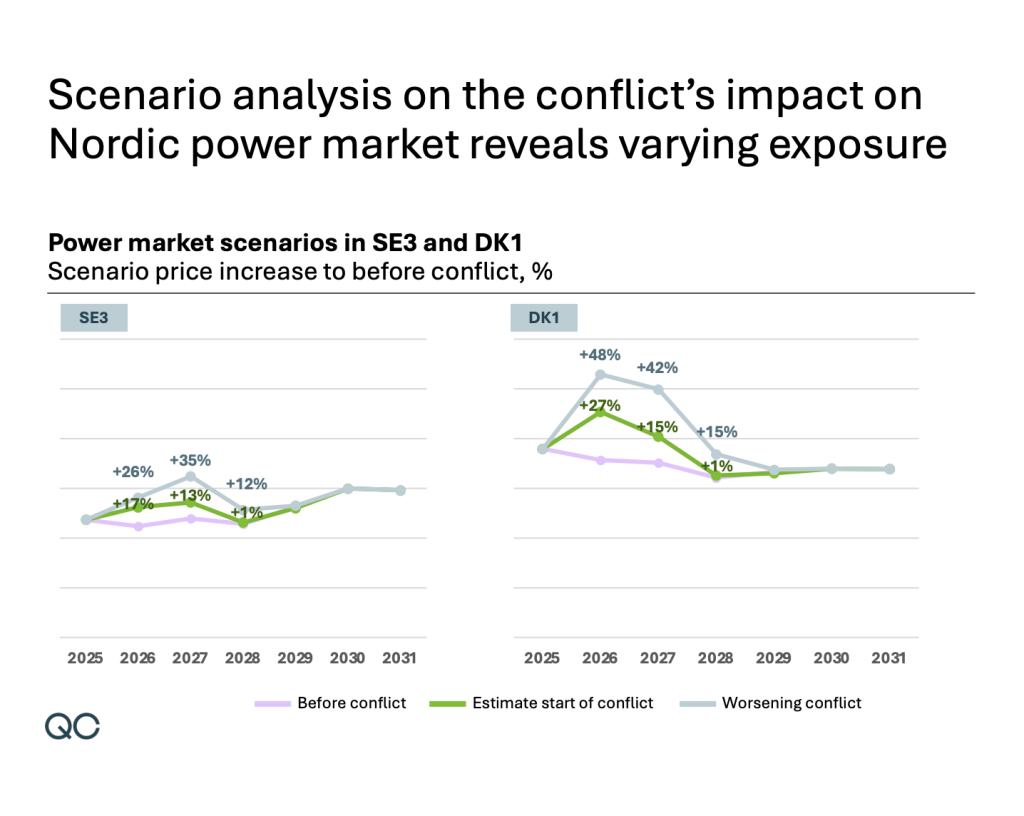
What are the Nordic power markets’ exposure to volatile gas prices?

06/10/26

System Studies / System Modelling

Power System Expansion in Germany

18/06/26

System Studies / Research & policy

Clean Firm Power in Europe’s Energy Transition: Evidence, Constraints, and System Roles

18/06/26

System Studies / Research & policy

Understanding Full System Costs

18/06/26

System Studies / System Studies

Swedish power systems robust for 300 TWh

03/03/26

System Studies / Research & policy
Our Analysis of the Electricity System is Based on Scientific Evidence – it’s High Time to Take Action

27/01/26

System Studies / Research & policy
How Would New Swedish Bidding Zones Perform?

READ MORE